
For parents and carers
Prepare your child's treatment step by step
First enter your child's details and the treatment appointment. You will then see step by step what to do, with the correct times and doses for your child.
Step 1
Enter the required details below
Useful for later
Add the appointment and instructions directly to your calendar
With one tap you can add the treatment appointment to your phone calendar, including the calculated instructions and times for your child.
Fasting instructions
Food and drink before anaesthesia
Following the instructions below about food and drink before treatment accurately is very important for the safe course of treatment under anaesthesia.
Why is this important?Under anaesthesia, stomach contents can come back up into the throat and enter the lungs. This can cause serious breathing and lung problems. It is therefore very important that you and your child follow the instructions about not eating before anaesthesia.
Clear fluids
Your child may drink clear fluids such as water, tea without milk, non-carbonated cordial and clear apple juice until . After that time your child must not drink anything.
School or childcareWe advise that your child does not attend school or childcare before treatment. Our experience is that children may still be offered food there or accept food from other children. This can mean the fasting instructions have not been followed and treatment may no longer be safe to proceed.
Rapydan® patches
Numbing the skin before the IV
The sleep medication is given to your child through an IV. Rapydan® patches reduce the pain of inserting the IV, but the patch needs time to work in the skin. The patches therefore need to be applied on time.
When?Apply the two patches at around to the .
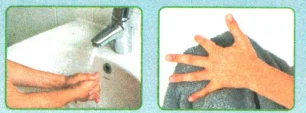
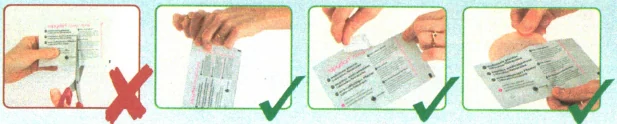
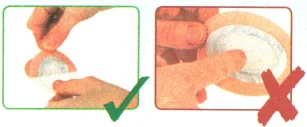
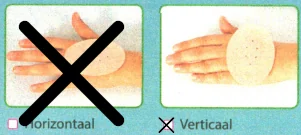
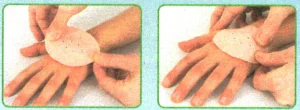
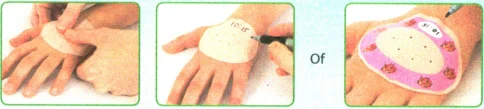
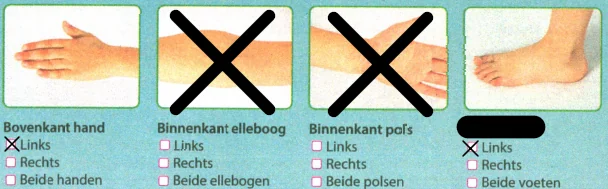
Pain relief before treatment
Give paracetamol AND ibuprofen
Give your child both paracetamol and ibuprofen . For an early appointment, if your child is still asleep, you do not need to wake them. Give the pain relief as soon as your child wakes, according to the personalised time below.
Paracetamol
For your child: .
The form does not matter: tablet, liquid or suppository are all possible. If a tablet is preferred and swallowing is difficult, you can for example use a dissolvable paracetamol product such as Roter.
Ibuprofen
For your child: .
We recommend Nurofen liquid for children. There are variants for ages 3 months–6 years and 6–12 years. In our preparation protocol, a 5-year-old child may also use the older-child variant.
Pay attention to the advised doseThe dose Dentics advises for this first dose may be higher than the standard dose on the packaging. This is an intentional part of preparation for treatment and, when using the schedule advised by Dentics, is not dangerous for your child. Follow the Dentics dose and do not give extra doses on your own initiative.
Is it not possible to give the medicine calmly?If your child strongly resists, for example because of a behavioural disorder, you do not need to struggle to force the medicine. Keeping your child calm before treatment is more important than a fight over pain relief. Tell us on arrival what was and was not possible.
Practical preparation
Calm, warmth and clothing
With a few simple preparations you can help make insertion of the IV as calm and easy as possible.
- Have your child wear long trousers and long sleeves.
- After applying the Rapydan® patches, put gloves or socks over your child's hands to keep them warm.
- Keep the gloves or socks on in the waiting room as well. Warm hands make IV insertion easier.
- Keep the morning or afternoon calm and avoid unnecessary tension before treatment.
What happens
How your child is put to sleep
We try to make going to sleep as calm and familiar as possible.
1
Sitting on the parent's lap
Where possible, and if your child's weight allows, your child sits on a parent or carer's lap.
2
Keeping the IV as much out of sight as possible
We try to insert the IV as much as possible outside your child's view. An assistant distracts your child with a book during insertion.
3
Sleep medication through the IV
Once the IV is in place, the anaesthetist gives the sleep medication while your child is still on your lap. Your child then falls asleep quickly on the parent's lap.
See how a standard induction of anaesthesia takes place
The situation shown is an example; the exact procedure may differ for each child.
During treatment
Parents wait in the waiting room
During the dental treatment, parents or carers wait in the waiting room. This allows the dentist to focus fully on the treatment while the anaesthesia team continuously monitors your child.
After treatment, your child goes to the recovery room while still asleep. For a larger child it may be more practical for the child to remain in the dental chair. The parent or carer is brought back as soon as possible so your child can wake up with a familiar face nearby.
After treatment
Waking up and travelling home safely
As soon as your child is awake and recovered enough, you may go home together. Your child may still be noticeably sleepy.
Arrange safe transport
Use a child seat if this still applies to your child. An adult must sit next to your child on the back seat and someone else must drive the car.
In general, we expect children to be able to eat the evening meal with the family again and return to school or childcare the next day, unless you receive different discharge instructions or your child does not yet feel sufficiently recovered.
Summary
The most important instructions for your child
Appointment:
Fasting:
Rapydan®:
Pain relief:
Transport: one person drives, a parent/carer sits next to your child in the back and a child seat is used where needed.
The calendar entry lasts approximately 2.5 hours and contains the concise instructions plus a link to this website.
Has anything changed?
Illness or a change in health
Does your child have a fever, new symptoms, a hospital admission, or has their health changed since screening? Send a WhatsApp message to 085 130 1240 before the appointment. Telephone availability is limited to days when the anaesthesia team is present at the practice to provide anaesthesia for dental treatments.
Risks and safety
Anaesthesia at Dentics
If you and your child follow the instructions carefully, this form of anaesthesia has a very low risk of complications. Around 60,000 dental treatments using this form of anaesthesia have now been carried out in various clinics in the Netherlands without complications being recorded that were attributable to the anaesthesia.
No form of anaesthesia is completely without risk. Your child is therefore screened beforehand, the anaesthesia team monitors your child throughout the treatment, and any personal instructions from the anaesthetist always take priority.
Contact
Do you still have a question?
For questions about screening and preparation, use the pre-operative number. For general questions, contact Dentics.
Screening & preparation085 130 1240Telephone availability is limited to days when the anaesthesia team is present at the practice to provide anaesthesia for dental treatments. You can always send WhatsApp messages.
Dentics general036 760 6060
Emailinfo@dentics.nl
AddressEuropalaan 923
1363 BM Almere
1363 BM Almere